What Is Picture-Smart Learning?
Some children see the world differently — literally. Where others see a random splash of color, the picture-smart child sees graphic design, pattern, and possibility. They think in images, dream in color, and communicate most naturally through drawing, building, and creating.
Exposure is the key to unlocking this learner. The more they are surrounded by pictures, colors, maps, models, and visual materials of all kinds, the more confidently they flourish. They are in their comfort zone when they can design, arrange, and imagine.
These children can see a treasure in someone else's trash — spotting beauty and potential in materials others overlook. That gift, nurtured well at home, leads to some of the most creative and high-paying careers available.
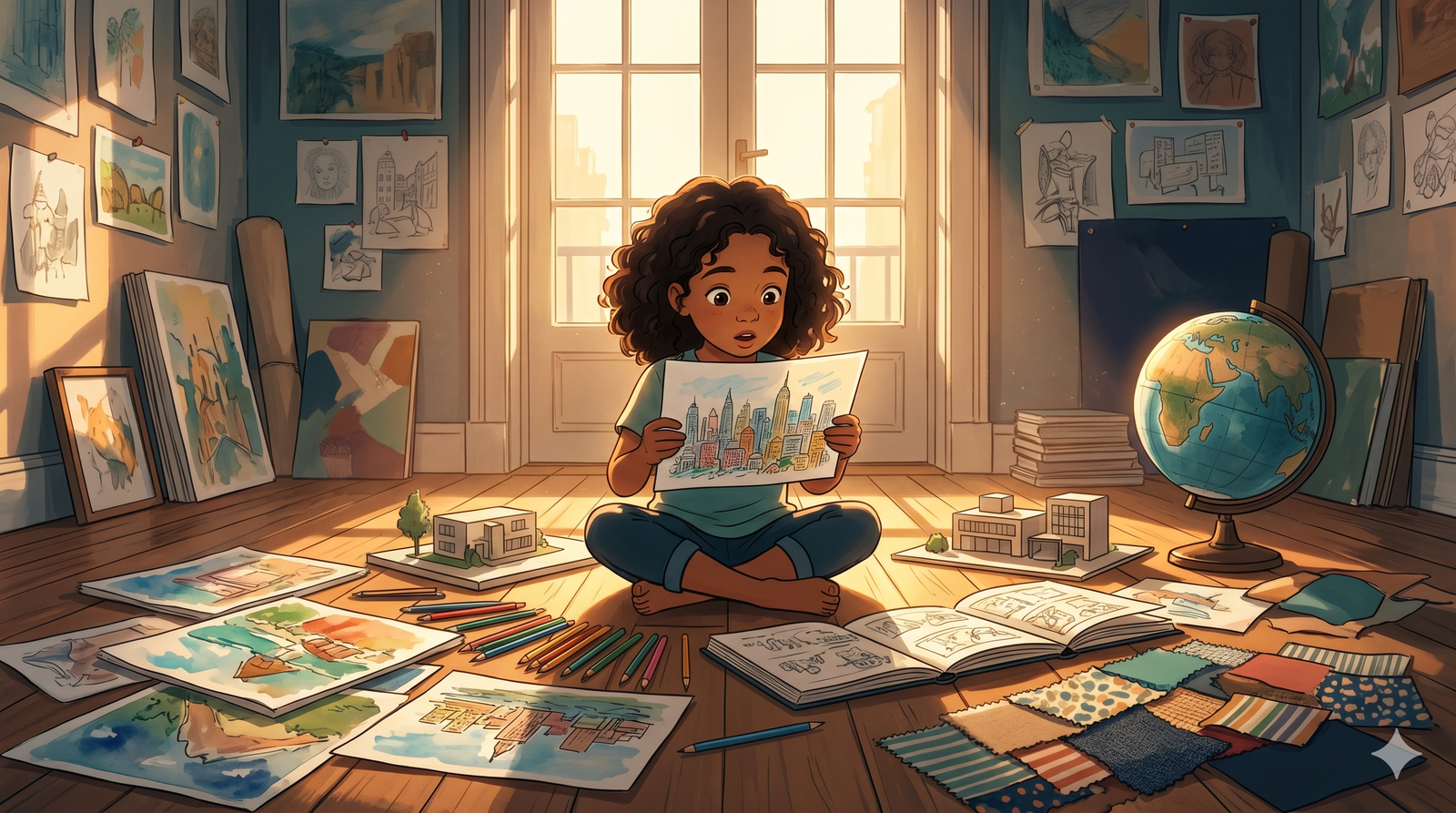

Exposure is key. The more children are surrounded by pictures, colors, and opportunities to use their imaginations — in any way — the more they thrive. They can look at what seems like a random splash of colors and see graphic designs, lines, and entire worlds.
Signs Your Child Is Picture-Smart
Always Drawing
They fill every spare piece of paper, napkin, and notebook margin with sketches, designs, and imagined worlds.
Drawn to Color & Pattern
They notice color combinations, fabric patterns, and visual arrangements that others walk right past.
Loves to Build & Take Apart
They take things apart to see how they work and then put them back together — or build something entirely new.
Reads Maps Naturally
They understand spatial relationships easily — directions, diagrams, blueprints, and charts make immediate sense to them.
A Vivid Daydreamer
They have a rich inner visual world. What looks like "zoning out" is actually their imagination at full speed.
Loves Mazes & Puzzles
Visual puzzles, mazes, Lego, and spatial games are their favorites — they can visualize the solution before they start.
Strengths & Learning Preferences
Picture / Visual Intelligence Profile
Core Strengths
- Reading maps & charts
- Drawing & illustration
- Mazes & spatial puzzles
- Visualization
- Building & constructing
- Taking things apart & reassembling
Favorite Activities
- Designing & drawing
- Building models
- Daydreaming & imagining
- Looking at pictures & art
- Watching movies & videos
- Finding patterns in everything
Learns Best By…
- Working with pictures & color
- Drawing or creating with art supplies
- Watching videos & infographics
- Building physical models
- Using diagrams & visual maps
- Designing their own projects
Visual Storytelling at Home

Turn Memories Into Comic Strips
For the visual learner, drawing is writing. Encourage your child to retell a family vacation, a funny moment, or a favorite story through comic strip panels — each box a scene, each scene a sentence.
This activity quietly builds narrative sequencing, vocabulary, and memory — all wrapped inside something that feels purely like play. Ask them to walk you through each panel and you've just run a language arts lesson without a single worksheet.
Other powerful language-arts visuals: designing a book cover for a story about Mom or Dad, or creating imaginary clothing for a family pet. Anything that merges words with imagery will resonate deeply with this learner.
Design Projects That Teach
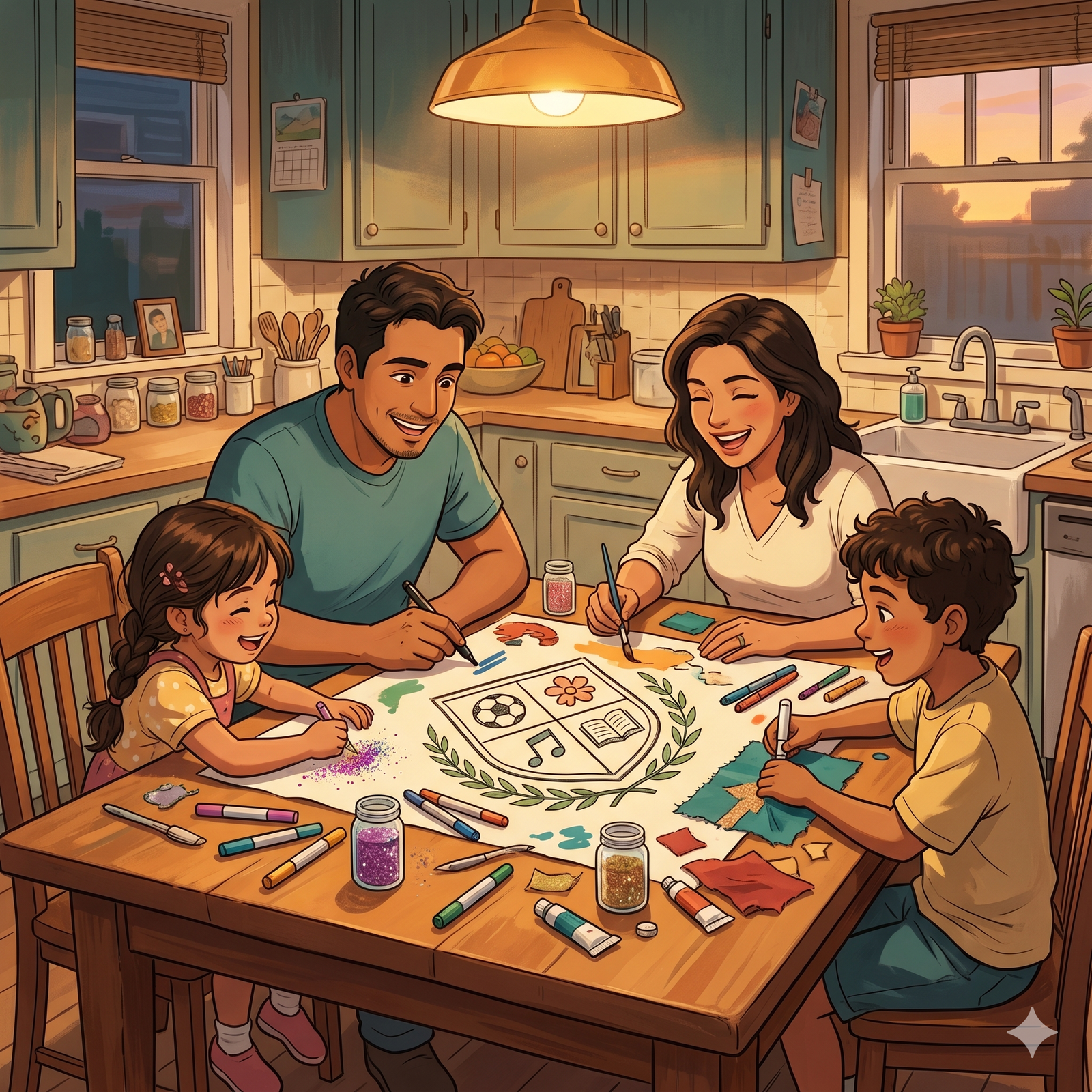
The Family Flag & Family Crest
One of the most powerful activities in this module is designing a Family Flag or Family Crest together. Each family member chooses a symbol that represents them — a soccer ball, a flower, a musical note, a book — and the child designs how they all come together.
This single project quietly teaches social studies (family identity, cultural pride), language arts (naming and explaining each symbol), and math (symmetry, spacing, proportion). The visual learner will lead this activity naturally — let them direct it.
Use markers, paint, glitter, fabric scraps — anything tactile and colorful. Display it proudly when done. Seeing their artwork honored is deeply motivating for this learner.
Activities by Subject
Language Arts
- Turn short stories and poems into illustrated scenes — let them draw what they hear
- Use comic strips to retell a story, a book, or a memorable family vacation
- Design a book cover for a story about Mom, Dad, or another family member
- Design clothes for the family dog or an imaginary pet — blends creativity with description
- Watch YouTube videos about tiny houses, fashion shows, or parades as a vocabulary springboard
- Design a city — an activity that naturally weaves in math, science, social studies, and storytelling
Math
- Help them "see" math using number lines, diagrams, and hand-drawn mazes connecting locations
- Encourage visual puzzles: Picture Sudoku, Uzzle, Pictionary, and tangrams
- Use graph paper for place value, spacing, drawing shapes, and exploring fractions visually
- Make a small Charcuterie Board — arranging food by color, type, and shape teaches grouping and proportion
- Visit a museum or art gallery and video their interpretation of an abstract painting
- Design a logo for a favorite sport or a t-shirt design for the next Family Reunion
Science
- Draw and study pictures of the water cycle, tadpole-to-frog, and caterpillar-to-butterfly life cycles
- Use videos and infographics instead of text to learn about the human body and digestion
- Observe and sketch clouds, plants, or insects on a nature walk — science journaling through illustration
- Create visual before-and-after comparisons of simple experiments — drawing predictions and results
- Use large outdoor chalk on the driveway to draw maps, diagrams, and scientific cycles at big scale
- Design and illustrate an imaginary amusement park — a full project blending science, math, and creativity
Making Math Visible
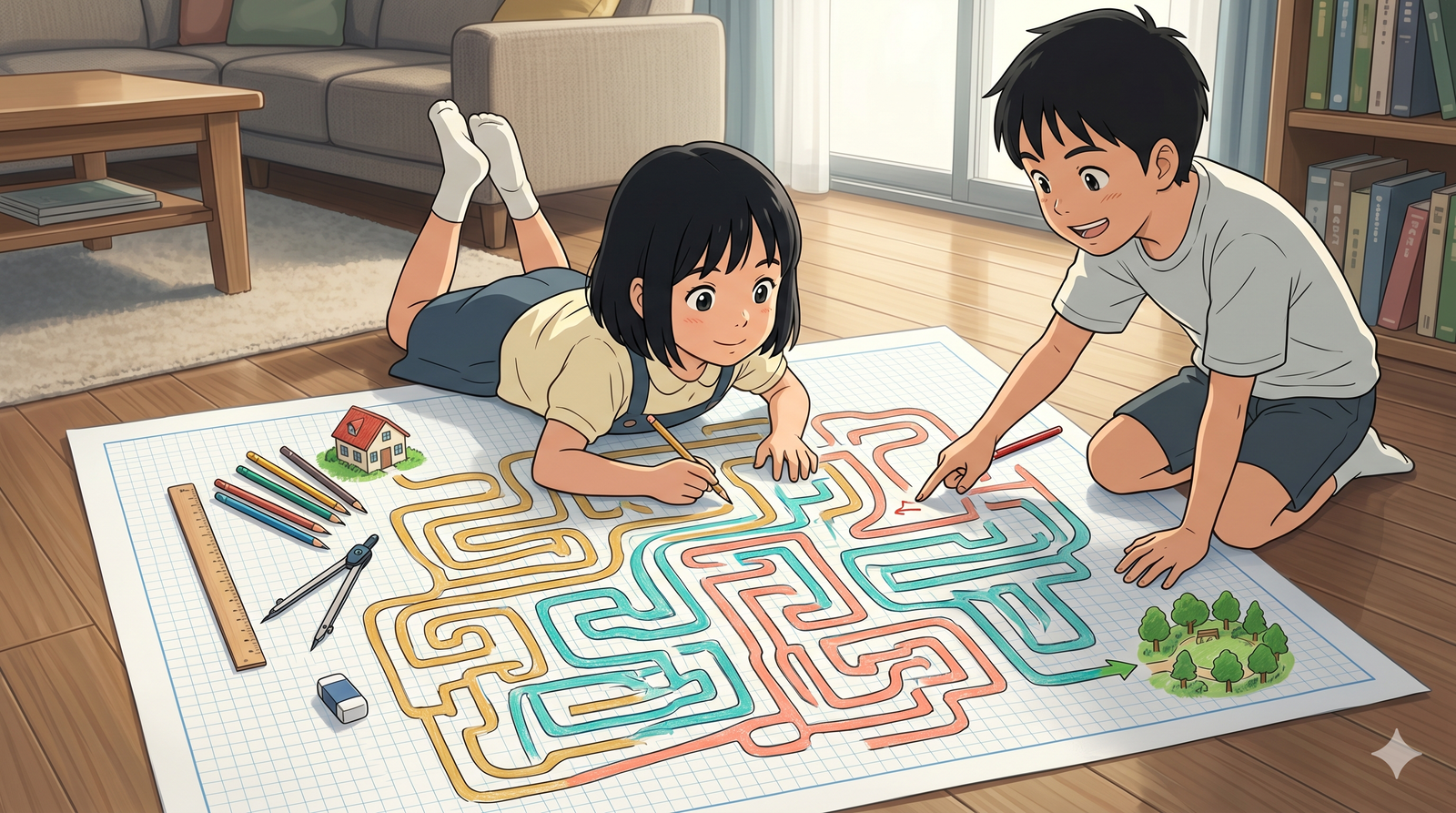
Design a Maze, Solve a Problem
Graph paper is one of the best tools for the visual math learner. Ask your child to design a maze — with a start point (a tiny house), an end point (a park), and all the paths in between. Then challenge a sibling or parent to solve it.
This single activity teaches spatial reasoning, directionality, planning, and even early geometry — all while feeling like a creative game. The visual learner owns this kind of problem completely.
Other great visual math tools: tangrams for exploring fractions and shapes, graph paper city layouts for area and perimeter, and Picture Sudoku for logical visual patterns. When math becomes something you can see and touch, it stops being intimidating and starts being exciting.
Career Pathways
Where Picture-Smart Children Thrive
Children who think in images and create with their hands often grow into professionals in the highest-demand visual-spatial and creative-technical fields. Their ability to see what others cannot is a career superpower.
They can see a treasure in someone else's trash. Encourage that vision — it leads somewhere remarkable.
Art Director
Film Director / Cinematographer
Architect & Engineering
Video Game Developer
Animator / Motion Graphics
Mapping Specialist
Urban Community Planner
Mechanical Engineer
Multimedia Artist
Set & Exhibit Designer
Costume / Fashion Designer
Interior Decorator